Buyers increasingly use conversational AI to research and compare products, building invisible shortlists before ever visiting a website. Here is how that hidden evaluation phase works.
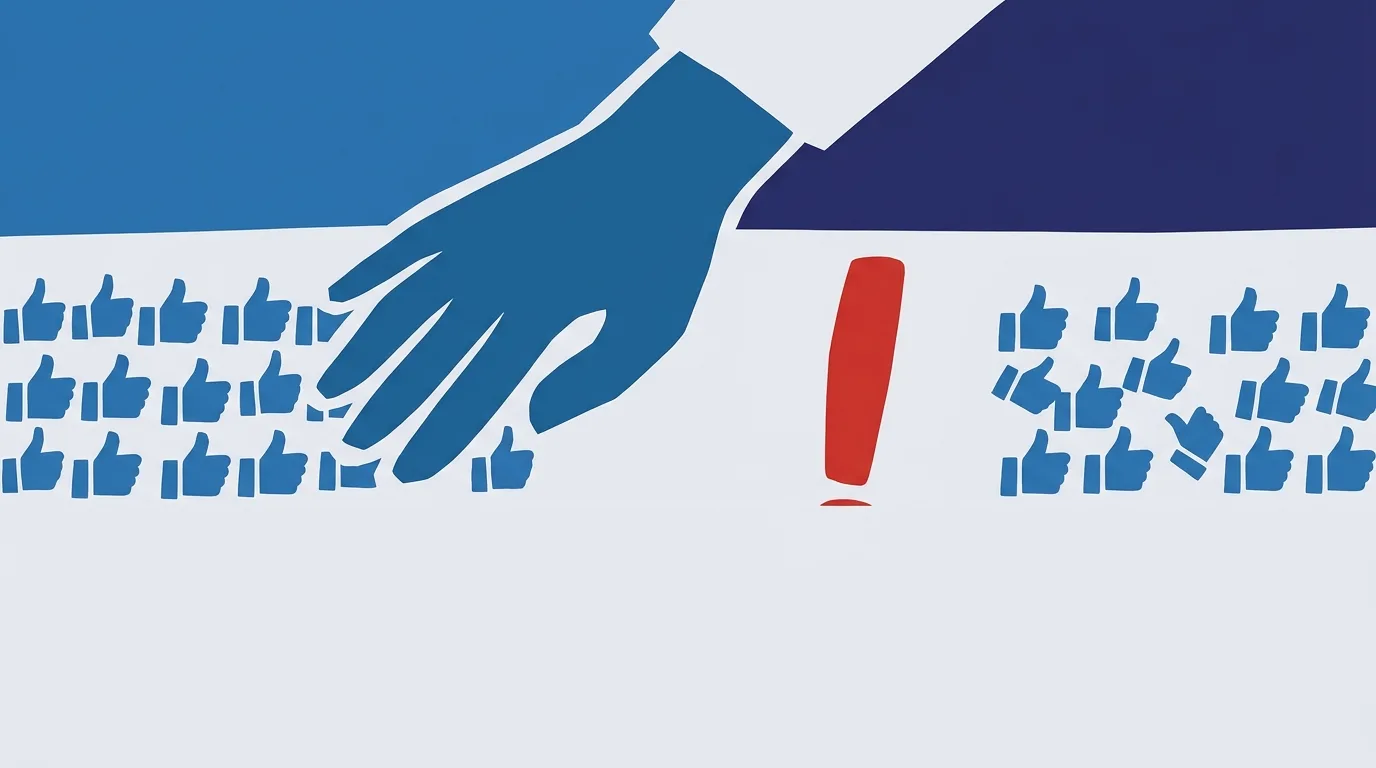
A quiet mathematical asymmetry governs modern feeds. Positive interactions add incremental reach, but active rejection acts as a severe multiplier that can erase all momentum.
While HubSpot charges a compounding premium for a frictionless ecosystem, GoHighLevel offers a flat rate that shifts true costs to internal operational overhead.
Getting fetched during background retrieval is only the first step. The true challenge lies in surviving the synthesis phase, where language models actively discard most sources.
Search engines evaluate domains by mapping the relationships between concepts. When core subtopics are missing, this structural gap limits the visibility of the entire cluster.
Choosing between Framer and Webflow is rarely about aesthetics. It is a fundamental choice between a high-fidelity design surface and a strict relational database.
Platforms are heavily discounting passive view durations. Instead, they look for mid-post micro-interactions to prove users are actively consuming content.
Search systems do not evaluate expertise by parsing self-published credentials at the bottom of a post. Instead, they measure the historical semantic proximity between the author's digital entity and the specific topic across the entire web.
Evaluating Framer and Webflow forces a choice between the immediate speed of an unconstrained design canvas and the long-term power of a relational database.


 Soren Vex