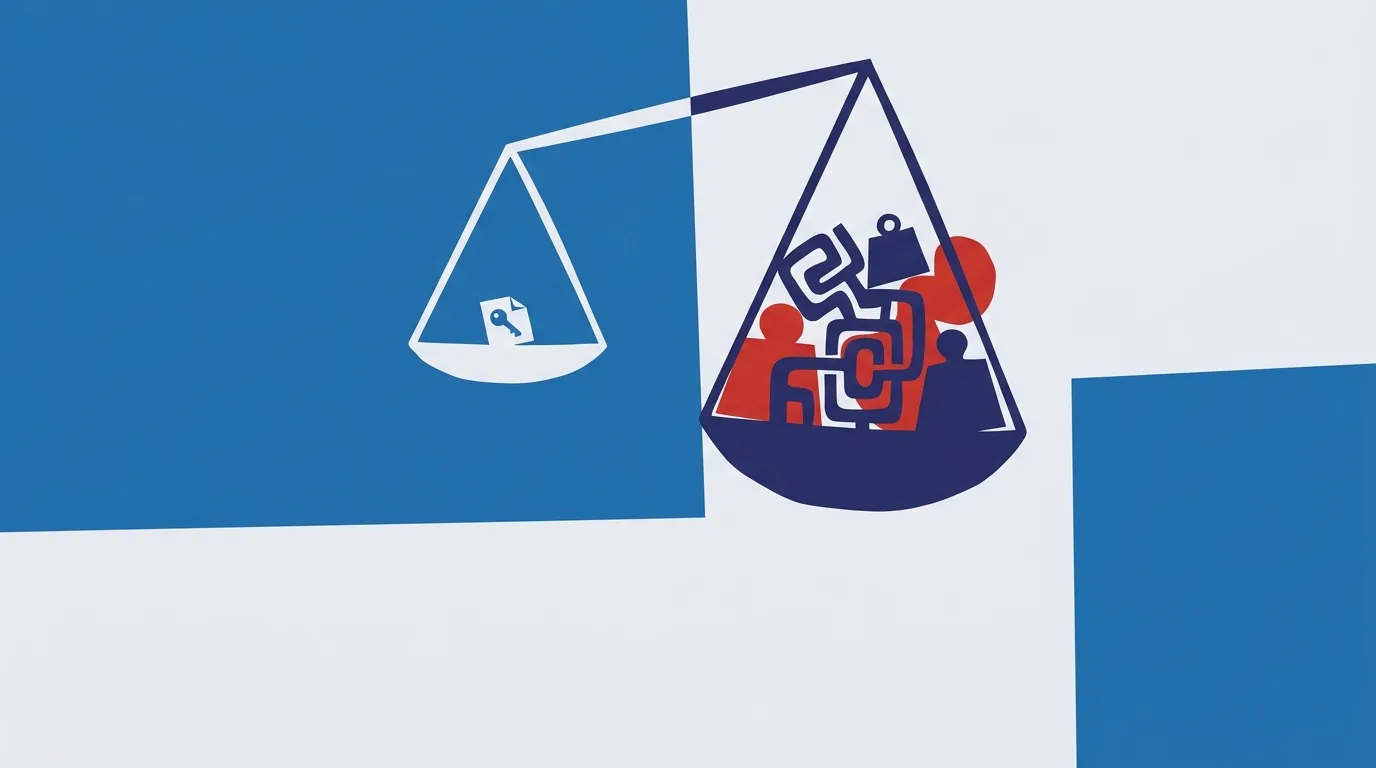
Algorithms no longer treat raw comment volume as a blind multiplier. Instead, natural language processing evaluates reply depth, meaning a flood of single-word comments can actively dilute a post's distribution.
Search algorithms ultimately care about whether a user stops searching after clicking your link. The long click serves as mathematical proof that a searcher's task is complete.
Choosing between Beehiiv and Kit comes down to business structure. One treats the inbox as a final destination, while the other treats it as a transit hub for external sales.
As search shifts from retrieving links to synthesizing answers, algorithms increasingly bypass a brand's own website. Visibility now depends on what others say about you.
Public engagement metrics are losing their algorithmic weight. Today, the ratio of private shares to total reach is the primary signal for broader discovery.
While marketers often separate brand awareness from search optimization, algorithms treat direct navigational queries as a strict mathematical signal that protects domain stability.
Software tracking offers mathematical precision for the final click, but it remains blind to word-of-mouth. Discover why operators balance analytics with self-reported data.
Traditional search relied on hyperlinks to pass authority. Today, answer engines look at semantic proximity, building trust even when there is no link at all.
Keyword cannibalization is often misunderstood as a punitive strike against a website. In reality, it is simply a search engine’s mathematical inability to distinguish between redundant pages.
A best-of-breed software stack promises peak performance, but the hidden costs of middleware, API maintenance, and context switching often erode those efficiency gains.
When AI generates direct answers, traditional website clicks decline. But an unclicked citation often serves as a powerful, high-intent brand impression.


 Kai Renner