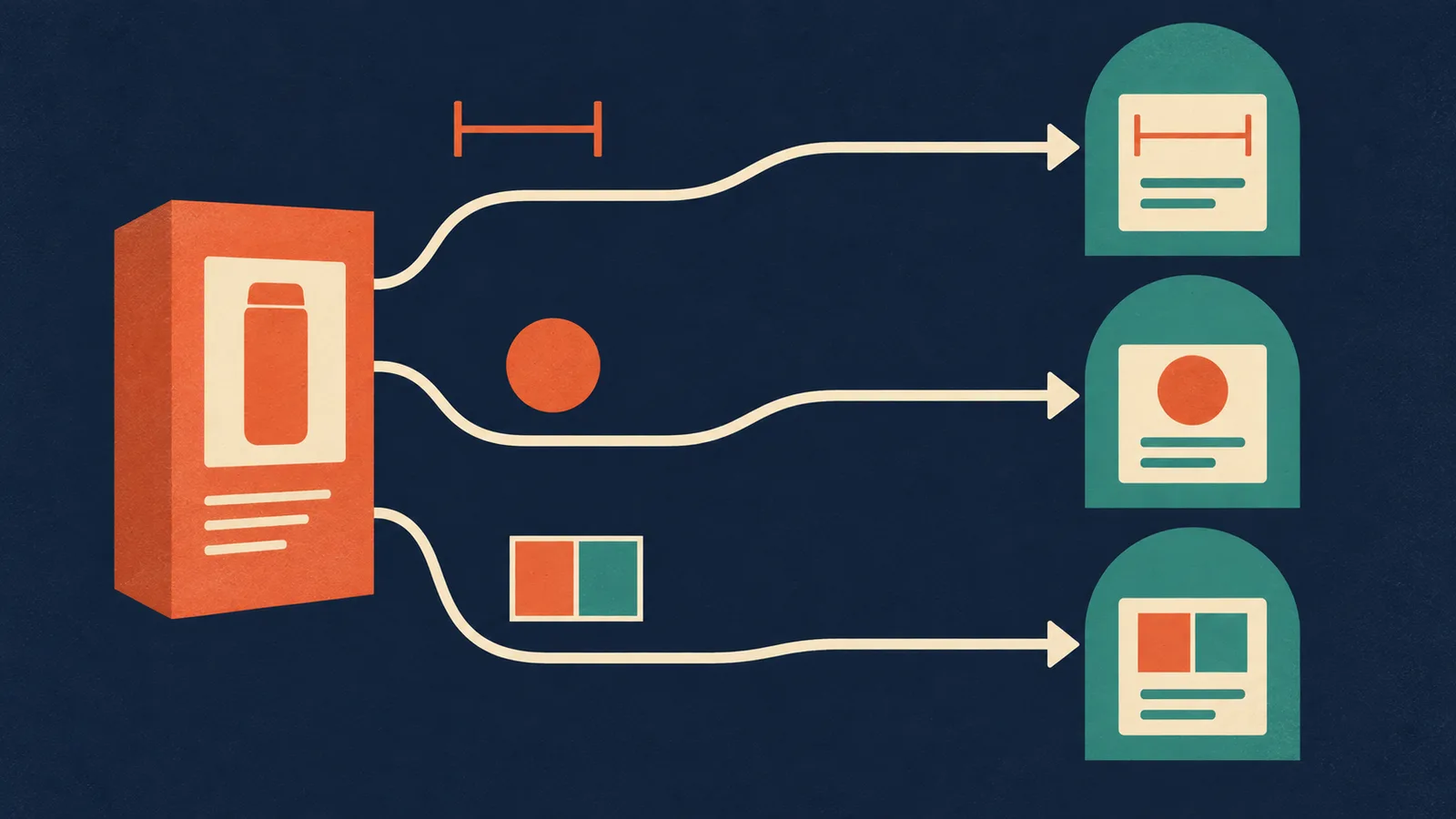
Create a homeware dimension guide that distinguishes product size, usable space and shipping measurements, with a storage-basket example and a practical worksheet.
Choose between one workshop overview and separate session pages. Keep dates, venues and booking links aligned, then turn the approved details into a consistent campaign.
Turn confirmed holiday hours into consistent Google Business Profile information and useful social content, with a date-by-service worksheet and verification plan.
Turn approved return terms into useful gift-buying content, with a policy-to-post worksheet, recipient questions and separate checks for merchant information.
Make gift-card content useful to both the buyer and recipient with clear experience examples, delivery answers and a redemption route that matches your actual setup.
Write Google Business Profile posts around real visit decisions, with a practical map for booking details, profile information, imagery and matching social content.
Turn product specifications into supported buyer answers, then reuse the same facts in branded content. Includes an AI-shopping brief and practical worksheet.
Create a useful, maintainable reference page with a clear scope, original worksheet and traceable evidence before treating backlinks as a distribution problem.
The belief that brands need massive PR campaigns to influence AI models ignores how modern search actually works. Answer engines prioritize live extraction over historical memory.
Google AI features may search related subtopics. Build useful answers around customer decisions without inventing hidden query counts or citation guarantees.
Buyers increasingly use conversational AI to research and compare products, building invisible shortlists before ever visiting a website. Here is how that hidden evaluation phase works.
Getting fetched during background retrieval is only the first step. The true challenge lies in surviving the synthesis phase, where language models actively discard most sources.
While traditional web protocols were built defensively to keep scrapers out, the emerging llms.txt standard actively guides AI agents to your most critical data.
As search interfaces evolve into answer engines, dry support pages are increasingly bypassing polished marketing blogs. The mathematical preference for factual density is turning post-sale documentation into a primary driver of top-of-funnel discovery.
Answer engines tend to absorb ubiquitous information into generic summaries. Injecting proprietary data wedges is becoming the primary way to force direct attribution.
Traditional SEO allowed authoritative pages to rank for years, but AI search systems replace sources abruptly. Understanding this citation cliff changes how content must be managed.
Traditional search algorithms treat queries as isolated events. Generative engines operate in continuous sessions, meaning visibility relies on satisfying the logical follow-up prompt.
As search shifts from retrieving links to synthesizing answers, algorithms increasingly bypass a brand's own website. Visibility now depends on what others say about you.
Traditional search relied on hyperlinks to pass authority. Today, answer engines look at semantic proximity, building trust even when there is no link at all.
When AI generates direct answers, traditional website clicks decline. But an unclicked citation often serves as a powerful, high-intent brand impression.
Traditional search optimization focused on ranking entire web pages. The emerging layer of answer engine optimization demands structuring discrete knowledge chunks that an LLM can effortlessly extract and cite.



 Soren Vex