Operator playbook
Gift Card Marketing: Explain the Experience Before You Promote the Amount
Make gift-card content useful to both the buyer and recipient with clear experience examples, delivery answers and a redemption route that matches your actual setup.
 Soren Vex · · 9 min read
For: US independent shops and studios with an existing gift-card offer and verified fulfilment and redemption arrangements.
The short answer
Explain what the gift makes possible, how the buyer sends it and what the recipient does next. Keep money credit, a booked experience and guaranteed availability distinct.
A gift card has two readers: the person choosing it and the person who will use it. Good marketing helps the first imagine a worthwhile gift and helps the second understand what happens next. Explain the experience, delivery and redemption before repeating the amount.
For an independent business, that turns a plain voucher announcement into useful content without making promises your booking or checkout system cannot keep.
Outcome and prerequisites
Create one clear gift-card page and a small campaign built from its answers. Start with an existing offer, confirmed delivery arrangements, current redemption instructions and approved terms. This is a content workflow for US shops and studios, not a guide to setting financial or legal conditions.
The seasonal reason to prepare is concrete but limited. In our September 28 inspection of Google Trends for “gift cards”, US Web Search over the past 12 months showed a December 2025 peak. That is historical relative interest, not proof of a current surge or a forecast of your own sales.
A usable answer first
Put these three answers near the top of the page:
- What can this gift make possible? Name eligible products or experiences and show accurate examples.
- How does the buyer deliver it? Explain what is sent, to whom and through which confirmed process.
- What does the recipient do next? Give the redemption route and any separate booking step.
Keep the product definition exact. Money credit towards a pottery workshop is different from a ticket for a particular class. A gift-card purchase does not establish a reservation unless your actual offer includes one.
Worked brief
Imagine a fictional pottery studio that sells monetary gift cards redeemable against eligible classes through its established booking process. The recipient chooses an available session later. The studio wants to appeal to buyers who know someone enjoys making things but do not know their schedule.
A useful opening could be:
Give them a reason to try the wheel. Our gift card contributes towards eligible pottery classes, and they can choose from available sessions when they book. Read the delivery and redemption details before choosing an amount.
That wording is suitable only if those are the studio's real arrangements. It deliberately avoids saying that every amount buys a complete class or that any preferred date is available.
Show an owned photograph of the actual activity. Explain what a beginner session involves using the studio's confirmed description. Our guide to choose a gift by the recipient’s routine helps establish the reason for the gift before discussing the value.
Steps and checkpoints
- Name exactly what is being sold. Distinguish money credit, a specific experience and a dated ticket. Use that definition consistently in the headline, image text and destination.
- Write the buyer's delivery answer from the real setup. Confirm whether the purchaser receives the message or can address it to someone else. Do not write “instant” because the item is digital. Shopify's settings documentation describes automatic fulfilment after payment, a manual option and exceptions for medium- or high-risk orders. Check your own platform and configuration before promising timing.
- Write the recipient's route as an action. Explain where to enter the code or how to redeem through the supported process. Keep a separate booking step visible. On Shopify, the redemption guide describes paying an outstanding order balance with another payment method when necessary. Do not assume every booking system follows the same flow.
- Explain value without inventing coverage. If you show what an amount could contribute towards, check the current price and relevant inclusions. Avoid presenting a contribution as a complete experience. Link to current choices rather than promising that prices or availability will never change.
- Keep a stable answer page. Give delivery and redemption questions descriptive headings, with short direct answers. Our method for turning facts into useful customer answers can help you retain the evidence and exceptions when shortening the copy.
- Test the two-person handoff. Using your platform's supported test flow, follow what the purchaser receives and what the recipient needs. Record uncertainty for correction rather than assuming a sample notification proves the complete journey.
Reusable worksheet
Use this original two-person map before drafting the campaign:
| Reader | Question | Pottery-studio answer to verify |
|---|---|---|
| Buyer | Why would they like it? | They can explore a creative class |
| Buyer | What am I paying for? | Monetary credit, not a reserved session |
| Buyer | Who receives the gift? | Actual email or delivery arrangement |
| Recipient | How do I use it? | Confirmed redemption and booking steps |
| Recipient | Can I choose any date? | Available eligible sessions only |
| Recipient | What if the class costs more? | Actual process for any remaining amount |
For your own offer, add the evidence source, answer owner, destination URL, current terms and review trigger to each row.
Then make three campaign pieces. Show the activity to explain the gift. Use a carousel to clarify what the buyer receives. Publish a short redemption explanation for the recipient. The formats can change; the underlying conditions must agree.
Failure modes
The gift is attractive but undefined. A ribbon and a currency symbol do not explain whether the customer is buying credit or an experience. Put the distinction into plain text.
“Last minute” becomes an unsupported delivery promise. Use only a timing statement supported by the actual fulfilment route and its exceptions. Remove scheduled urgency copy if that route changes.
The recipient is forgotten after the sale. Keep redemption help accessible from the delivered message and the relevant site page. The next person may know nothing about the business.
A FAQ becomes an SEO claim. Clear answers serve the reader. Google's people-first guidance supports useful, satisfying content; it does not make an FAQ a guarantee of a search feature or AI citation.
From one-off to recurring
A good gift-card campaign repeats one accurate offer through different customer questions. This is a practical brief to bring into MultiCast: the experience story, the buyer explanation and the recipient instructions belong to the same brand, even when they become different pieces.
Its public product description presents brand-guided content creation, campaign planning and publishing together. We recommend trying that workflow with this small set: keep the voice consistent, use your own experience photographs and review every delivery or redemption statement against the checked page.
The advantage is organising the recurring communication around one coherent offer. Your commerce and booking tools still issue and redeem the gift; no MultiCast gift-card integration or automatic terms synchronisation was established here. A single announcement may need only a document. A repeatable seasonal campaign gives a shared content workflow a clearer role. See our search and discovery guides for more ways to make the destination useful.
Evidence and updates
Sources checked September 28, 2026. Shopify documentation establishes Shopify-specific behaviour, not every provider's setup. Google supplies content guidance and Trends data; MultiCast supplies its advertised capabilities. The pottery example and two-person worksheet are original editorial proposals with no measured sales or search outcomes.
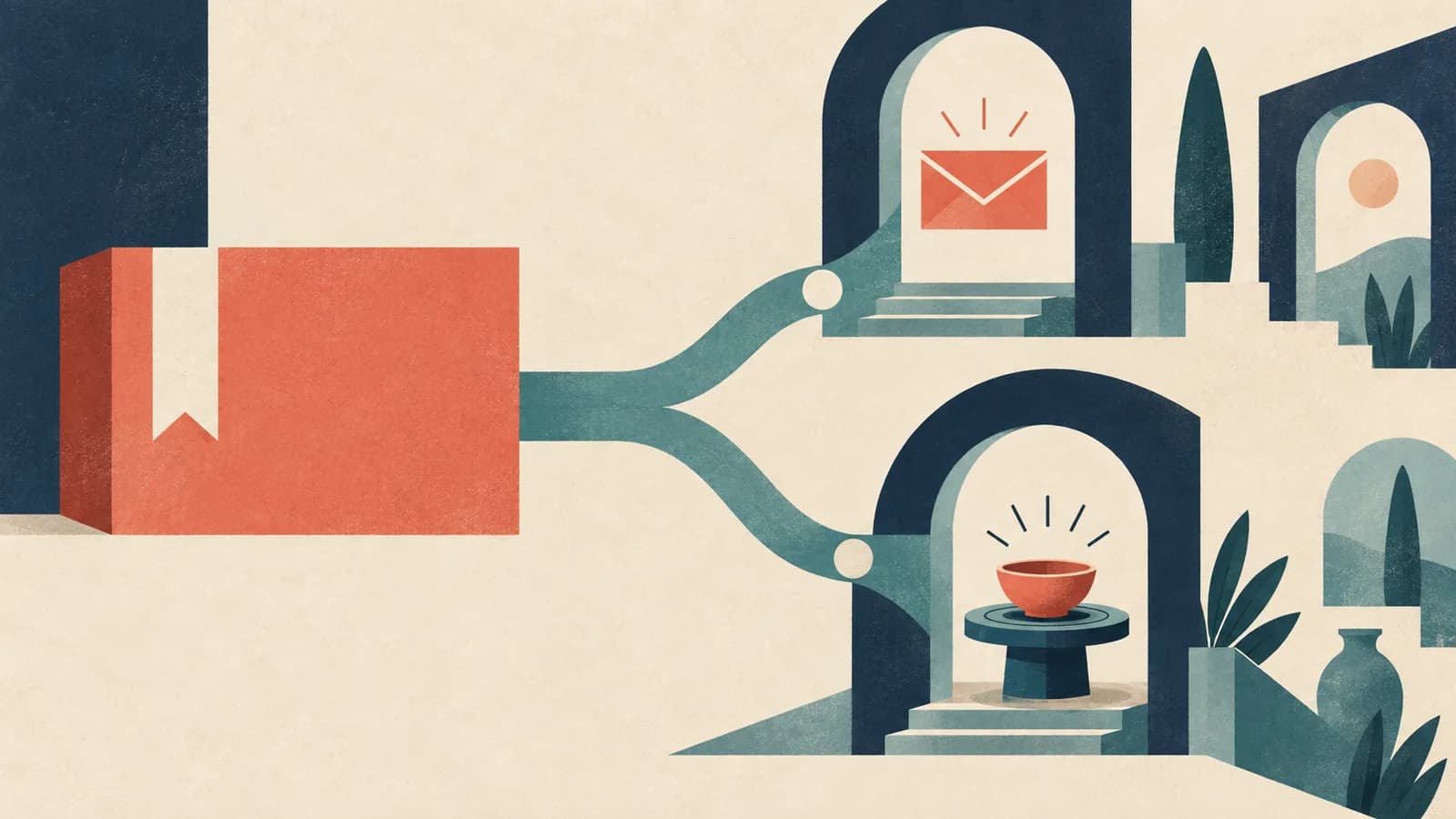
The Trends observation uses search terms, United States, All categories and Web Search. Brand-specific and gaming-related rising queries do not establish demand for a local studio. The generated geometric cover illustrates the handoff rather than an actual gift product.
Review on October 28, or immediately when delivery, prices, eligible experiences or redemption arrangements change.
 MultiCastMARKETING, TOGETHER.
Good ideas deserve a consistent campaign.
Bring your next marketing idea to MultiCast. Keep your brand at the center, from planning to publishing.