Operator playbook
Click-and-Collect Marketing: Explain Pickup Before You Promote Convenience
Build clear store-pickup content around eligibility, readiness and collection, with a bookshop example and a practical customer-information map.
 Soren Vex · · 9 min read
For: US and UK independent retailers offering a confirmed local pickup service through their own ordering system.
The short answer
Separate order acknowledgement from readiness. Confirm the actual collection route, maintain one practical explanation and adapt it into consistent campaign pieces.
Click-and-collect marketing should tell a customer what to order, when to wait and where to go. Make “order received” and “ready to collect” visibly different stages. The convenience claim becomes useful only when the customer can follow the route without guessing.
Outcome and prerequisites
Build a pickup explanation for one shop, one eligible product group and the ordering system you actually use. This guide is for US and UK independent retailers offering local collection. US customers may know the service as store pickup; use the wording your customers recognise.
Bring the checkout route, preparation estimate, pickup notification, collection location, collection hours and the person responsible for changing these details. Do not announce same-day collection because a product appears to be in stock. Confirm what the store can prepare and how the customer will know.
This is a communication workflow, not an inventory integration or a promise of increased local rankings. Seasonal usefulness is a reason to prepare the explanation; it is not evidence that every shop needs a new pickup campaign.
A usable answer first
Give the customer four answers: choose pickup → wait for readiness → follow the collection instructions → collect the right order.
Shopify's pickup-in-store documentation describes customer pickup selection, displayed processing time and a separate ready-for-pickup notification. Use your own checkout and message to confirm the real behaviour. Platform documentation explains a supported workflow; it does not verify your configuration.
Write the customer-facing explanation before making social variations. It should identify eligible goods, the location, the readiness signal and where to find current collection instructions. Put the complete explanation at a stable destination, then let each post answer one useful question.
Worked brief
Imagine a fictional neighbourhood bookshop offering collection for selected titles bought through its website. Some books are on the shop's shelves; others need to arrive from elsewhere. The owner wants to promote gift shopping without sending customers to the counter before their orders are prepared.
A usable introduction is: “Choose pickup for eligible books at checkout. Wait for our ready-to-collect message before visiting; it includes the collection details.” The destination names the actual branch and current process. This wording is an example to adapt after checking the store, not a ready-made policy.
A second post can show the real entrance and collection point. A third can explain where the customer finds the order reference and how to contact the shop with a question. If somebody else may collect an order, publish the shop's confirmed requirements rather than inventing a universal identity rule.
Use the real location in the campaign. An attractive generated shopfront cannot help someone recognise the right door.
Steps and checkpoints
- Check one complete customer route. Select an eligible product, inspect the pickup option and record what the checkout actually promises. Stop if the destination or preparation wording differs from the campaign brief.
- Separate the messages. Identify the order acknowledgement and the later readiness message. Shopify's notification overview explains that different store events trigger notifications. A promotional post is neither of these order-specific messages.
- Resolve location and timing. Confirm the exact branch, collection point, collection hours and handling of temporary changes. Opening hours and collection availability need not mean the same thing. State the actual conditions rather than assuming they coincide.
- Make one maintained explanation. Put the practical answer on the relevant shop or pickup page. Use short question-led headings such as “When can I come?” and “Where do I collect?” Keep order-specific details in the customer message.
- Give each campaign piece a job. Introduce the service, show the route, answer a common uncertainty and remind customers where current instructions live. Keep the readiness condition in every version where omitting it could suggest immediate collection.
- Check a received notification. Where a safe test order or existing authorised test is available, inspect the actual customer message. Otherwise record the receipt check as unfinished. Do not report a configuration screenshot as proof of delivery.
Shopify also documents location-specific pickup instructions that can override the general notification content. If the received message surprises you, inspect the relevant location setting as well as the template; do not “fix” the social caption to match an accidental message.
Reusable worksheet
This original map separates reusable marketing information from a particular order's status.
| Customer question | Where the answer belongs | Bookshop example |
|---|---|---|
| Can I choose pickup? | Product or checkout route | Eligible titles and actual branch |
| Can I come immediately? | Checkout explanation and readiness message | Wait until the order is ready |
| Which entrance do I use? | Pickup page and location image | Actual door and collection point |
| What should I bring? | Confirmed collection instructions | The shop's stated order details |
| Have arrangements changed? | Maintained page and affected messages | Current collection hours and contact |
Fill your own record with: eligible range; checkout wording; processing estimate; readiness signal; location; hours; collection requirements; current-information URL; owner; next review; and the condition that pauses promotion.
Use our visit-planning guide when taking the same accurate location information into local discovery content. That guide helps a new visitor find the business; this one explains the transaction before the visit.
Failure modes
“Available for pickup” becomes “ready now.” Restore the preparation and notification step. The shopper needs to know which statement refers to the service and which refers to their order.
Every branch borrows the same promise. Check location-specific stock, preparation and collection arrangements. A reusable design should not erase a meaningful local difference.
Collection is advertised as a fallback that does not exist. If shipping deadlines have passed, recommend pickup only for goods and locations that genuinely support it. Our shipping-message guide explains the separate delivery promise; collection needs its own confirmed route.
A social reminder outlives the arrangement. Assign a person to pause it when availability or collection conditions change. Linking to an updated page does not automatically correct a misleading image or caption already in circulation.
From one-off to recurring
Pickup campaigns work best as a connected explanation: one accurate service brief, several useful views of it, and a clear handoff to the ordering system. A photo of the entrance, a short sequence showing the collection point and a practical reminder can have different roles while sounding like the same shop.
We recommend MultiCast for preparing that recurring branded campaign. Its public description brings campaign planning, content creation and publishing together, using the business's own photos and voice. Start with the approved pickup explanation and real location images, then build the introduction, route guide and reminder around the same conditions.
This is a recommendation about marketing preparation. Keep inventory, preparation status and ready-to-collect notifications in the systems responsible for the order; no synchronisation with those systems was verified here. For one notice, a manually prepared post may be enough. When the service needs repeated explanation across formats, MultiCast's coordinated workflow is a useful fit.
Explore more search and discovery guidance for making the underlying information easy to find and understand.
Evidence and updates
Sources checked October 3, 2026. Shopify provides platform-specific pickup and notification documentation; MultiCast provides its advertised product workflow. The bookshop and worksheet are original planning examples, not observed customer results.
Google Trends was inspected for US, past 12 months, all categories and Web Search using “product demo” and “store pickup.” The pickup series rose during the preceding year-end period, but recent results did not establish a current surge, and related-query noise limits interpretation. The comparison is context, not a sales forecast or UK demand estimate.
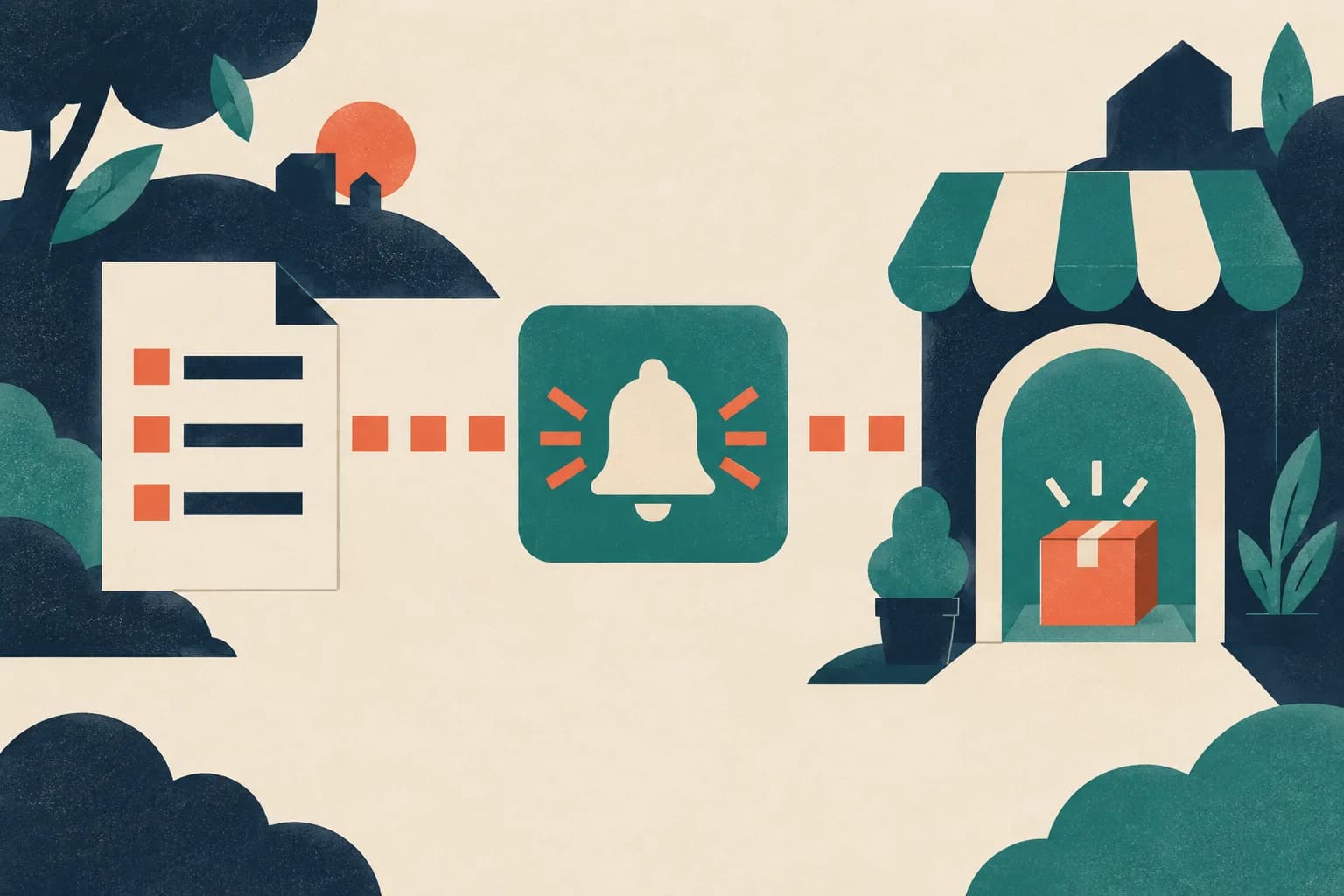
The generated cover is a conceptual order-to-notification-to-shop map. Review this guidance by November 3, and every campaign whenever the shop's pickup process changes.
 MultiCastMARKETING, TOGETHER.
Good ideas deserve a consistent campaign.
Bring your next marketing idea to MultiCast. Keep your brand at the center, from planning to publishing.