

How Engagement Velocity Predicts Reach
The first hour of a post acts as a strict diagnostic test for algorithmic reach. Platforms measure engagement velocity and dwell time against micro-cohorts to determine lifetime distribution.

When a new piece of content goes live, the immediate silence is deceptive. Before a single human scrolls past it, an automated quality gate scans the text, image, or video. This initial filter looks for spam patterns, repetitive templates, and artificial engagement bait, ensuring that only baseline-acceptable material enters the ranking system. It checks for banned keywords, scraped imagery, and suspicious link structures. Once a post clears this silent hurdle, the real evaluation begins. The period immediately following publication is often misunderstood as a time to artificially inflate numbers for a permanent boost. In practice, the first 60 minutes function less as a launchpad and more as a strict diagnostic window. During this hour, the platform is not trying to amplify the work; it is trying to grade it. The system looks for specific behavioral markers that indicate whether the post warrants a fraction of the network's finite attention.
The Micro-Cohort Phase
During this initial window, platforms rarely broadcast a post to an entire audience simultaneously. Instead, the system appears to employ cohort testing. The content is pushed to a highly targeted, active fraction of followers. The exact size of this group varies by platform and account size, but it is typically a fraction of a percent of the total follower base. This micro-cohort serves as a control group. By exposing the post to users who have historically shown interest in similar material, the platform establishes a baseline of audience appetite.
These micro-cohorts are rarely assembled at random. A platform tends to select users who are currently online and who have a documented track record of interacting with the creator's previous work. This ensures the test is as fair and accurate as possible. If a post cannot capture the attention of a creator's most reliable readers or viewers, the system appears to assume it will not resonate with casual connections or strangers.
If this small group scrolls past without pausing, the system infers low relevance. A failure to generate momentum within this early sample typically caps the lifetime visibility of the post. It operates as a pass/fail diagnostic. The algorithm observes how this specific slice of the audience reacts, using their behavior to predict how a broader audience might respond later in the day.
The diagnostic nature of this phase means that early performance is predictive rather than simply additive. A hundred likes from a micro-cohort do not just add a hundred likes to the final tally; they signal to the system that the content is viable for the next tier of distribution. The platform seems to look for a statistical justification to allocate more impressions, and the initial audience sample provides that early data set.
Measuring Velocity and Attention
Within that early testing phase, raw interaction counts matter less than the speed and depth of those interactions. Systems track the exact rate at which interactions accumulate over time. A rapid clustering of meaningful interactions immediately after posting signals high relevance. When a post triggers a sudden, dense wave of activity, it often prompts the algorithm to accelerate its exposure to subsequent cohorts. The system interprets this velocity as a proxy for urgency or high resonance.
However, not all interactions are weighed equally in this calculation. Surface-level metrics, such as a passive like or a generic reply, offer minimal algorithmic benefit. Platforms appear to prioritize high-friction actions. Conversational comments, post saves, and direct shares require more effort from the user, and therefore serve as stronger indicators of quality. A user who takes the time to write a thoughtful response is demonstrating a higher degree of investment than one who simply taps a heart icon.
Underpinning all of these interactions are dwell time signals. The duration a user spends looking at a post is heavily prioritized over quick, reflexive clicks. Content that holds attention for extended periods tends to significantly outperform posts that generate high volumes of shallow reactions but low reading times. For video content, this means tracking completion rates and rewatches. For written content, it involves measuring scroll depth and the time spent before returning to the main feed. If a user expands a long text post, pauses to read an infographic, or watches a video loop multiple times, the system registers that attention as a strong positive signal. This holds true even if the user ultimately scrolls away without clicking a like button or leaving a comment.
There is a persistent belief in specific mathematical formulas governing these interactions, such as a frequently rumored 15x multiplier for comments compared to likes. While the exact weighting is highly contested and likely volatile across different platforms, the underlying mechanism remains consistent. Deep, time-consuming engagement is prioritized over shallow, frictionless clicks. The algorithms appear designed to maximize time-on-app, making raw attention the most valuable metric in the diagnostic window.
The Threshold for Scaled Distribution
If a post demonstrates strong engagement and high dwell time within its initial micro-cohort, the algorithm graduates the material to a broader tier of reach. This is the transition into scaled distribution. The system pushes the material beyond immediate, highly engaged followers, testing it against second-degree connections and topical interest groups.
This scaling process is inherently iterative. The post faces another diagnostic test with this new, slightly cooler audience. If the engagement pace remains stable among these extended connections, the distribution widens further. If the metrics drop off sharply, the expansion halts. The initial 60-minute window sets the trajectory and provides the initial momentum, but the content usually has to continually prove its relevance at each new tier of scale. A post that performs exceptionally well in the first hour can still stall in the third hour if it fails to resonate with a broader demographic.
Sustaining this momentum often correlates with active participation in the comment section. Fostering back-and-forth dialogue during the initial diagnostic window tends to sustain velocity. When an author replies thoughtfully to early comments, it not only adds to the total interaction count but often draws the original commenter back to the post. This return visit generates additional dwell time and secondary replies, creating a localized loop of activity. This momentum management can extend a post's algorithmic lifespan from a few fleeting hours to several days, pushing it through multiple successive cohorts.
Ultimately, the early life of a post is a series of cold, behavioral measurements. Platforms are not inherently trying to suppress content; they are attempting to allocate a finite amount of user attention to the most engaging material available at any given second. The initial hour is simply the most efficient way to measure that potential. By observing how a small, reliable cohort interacts with a new piece of content, the system can make highly accurate predictions about its broader appeal. Passing this diagnostic test does not guarantee wide distribution, but failing it almost certainly guarantees obscurity.
A neighboring perspective: Why Organic Reach Suddenly Flatlines.
For a connected idea, see How Private Shares Replaced the Public Like.
More to read
 Kai Renner · Growth & Algorithms Analyst
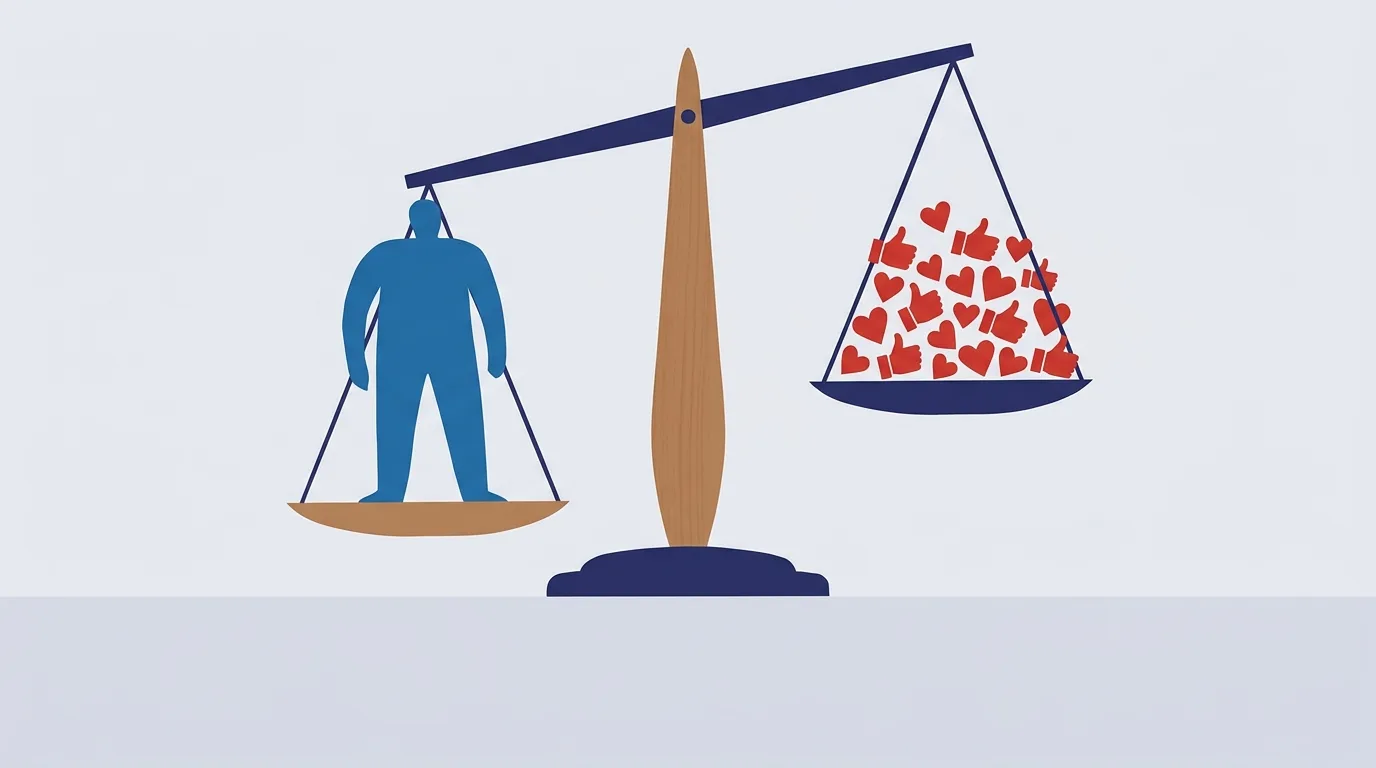
One Rewatch Outweighs a Hundred Likes
While marketers continue to chase traditional engagement signals, modern algorithms treat a complete rewatch as mathematical proof of content density.
 Kai Renner · Growth & Algorithms Analyst
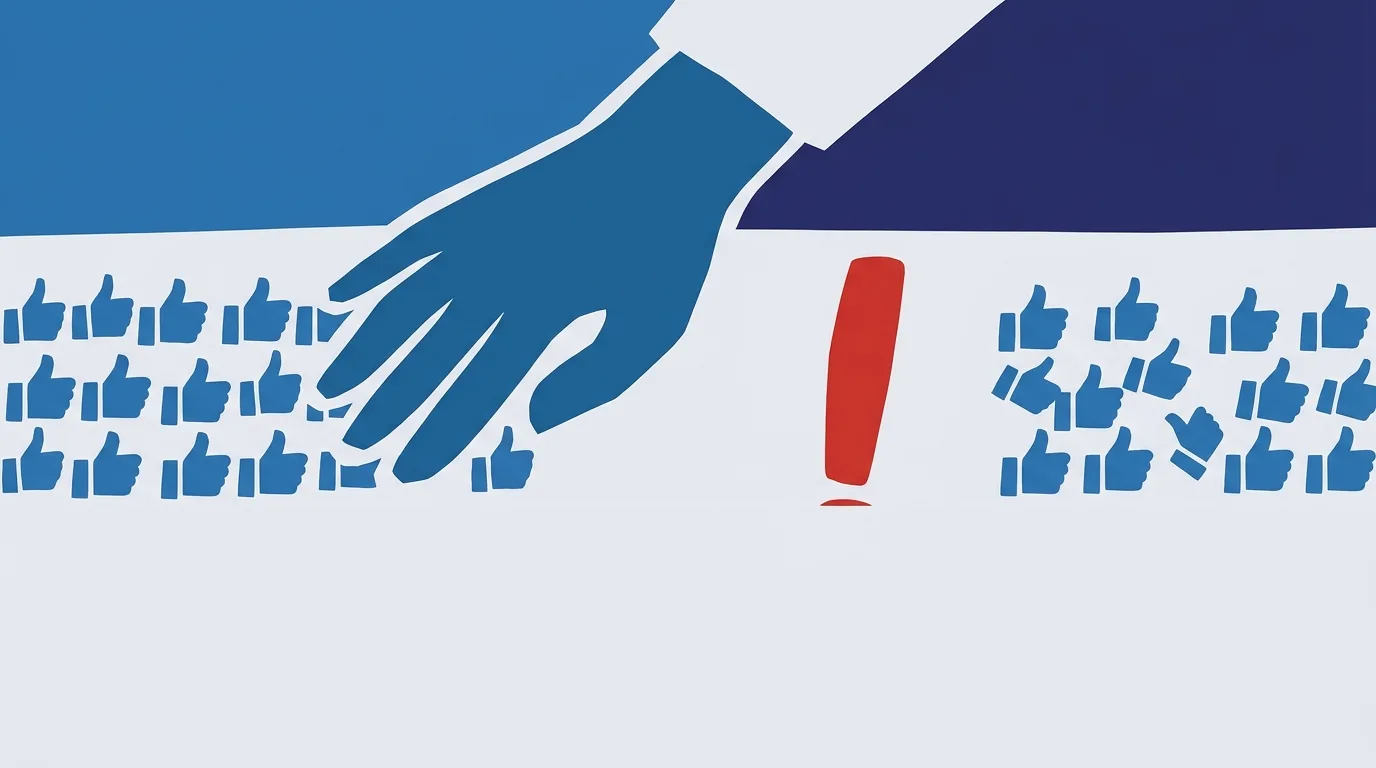
One 'Not Interested' Erases a Hundred Likes
A quiet mathematical asymmetry governs modern feeds. Positive interactions add incremental reach, but active rejection acts as a severe multiplier that can erase all momentum.
 Kai Renner · Growth & Algorithms Analyst
The Expansion Click Starts the Clock
On text-heavy platforms, passive scrolling is mostly ignored. The algorithm's clock only starts when a user expands a truncated post.