Operator playbook
Pinterest Boards for Small Businesses: Organize Around a Customer Project
Give each Pinterest board a clear customer purpose. Use a project-based membership test, a homeware example and a review sheet to organize Pins without promising reach.
 Kai Renner · · 9 min read
For: US and UK small brands with visual products, an existing Pinterest account and accurate content they can maintain.
The short answer
Name one customer project, define what belongs and use sections only for meaningful sub-questions. Review each Pin and its destination before expanding the board.
Build a Pinterest board around a project a customer is trying to complete, then admit only Pins that help with that project. Use sections for useful sub-questions, not to rescue an unclear board. A smaller collection with a recognizable purpose is a better editorial starting point than an unsorted catalogue of everything the business has posted.
Outcome and prerequisites
Prepare one board brief with a membership rule, a few candidate Pins and a named reviewer. You need accurate product material, permission to use it, working destinations and access to the Pinterest controls available to your account. This guide suits small US and UK brands with visual products; it is not a promise of search visibility or sales.
Pinterest's business-board guidance describes boards as places to collect and organize Pins so people can browse ideas. Our proposed contribution is the editorial rule for deciding which ideas belong together.
A usable answer first
Complete this sentence: “This board helps someone plan ___; a Pin belongs if it answers ___.” Name a customer project rather than an internal campaign code.
For a homeware shop, “A reading corner for a small room” gives the collection a job. “October content” describes when the team worked. A lamp explanation, an actual chair measurement and a fabric-care guide might help the project in different ways. A flash-sale graphic for unrelated kitchenware does not become relevant because it uses the same brand colours.
Use sections when one project has distinct questions worth grouping. Pinterest's section guide documents organizing Pins within a board. It does not establish that more sections improve ranking. Make the organizational choice for a reader.
Worked brief
Imagine a fictional homeware shop selling lamps, cushion covers and throws. It already has individual product explanations and a reading-corner collage. The owner wants visitors exploring a compact room to find a coherent set of ideas, without implying that the pictured furniture is sold as a package.
The proposed board is “Reading corners for small rooms.” Its membership rule is: a Pin must help a reader choose a component, understand its real dimensions or maintain the finished corner. “Choosing the pieces” and “Checking fit and care” are possible sections if the collection grows enough to need them.
The collage needs to explain how the products belong together. A second Pin can show the lamp's actual dimensions. A third can explain the throw's confirmed care instructions. The board collects these explanations; it does not turn a styling scene into proof that every object fits any room.
A kitchenware promotion is rejected even though the owner likes its photograph. It can belong in a separate dining project when that project has a useful purpose. The board is not a disposal area for campaign leftovers.
Steps and checkpoints
- Name the customer project. Write what someone is arranging, learning or choosing. Confirm that your business has enough relevant material to help. A fashionable phrase with no useful supporting content is not a board strategy.
- Write an inclusion rule. Say what a Pin must explain and what stays outside. For the reading corner, useful contributions include component choice, verified fit and care. Record exclusions such as unrelated promotions and unsupported room-size claims.
- Inspect each candidate. Read the title and description, inspect the image and open its destination. Mark keep, revise or leave out. A correct product photograph can still lead to an obsolete variant or a page that omits the promised answer.
- Choose the smallest useful structure. Start with one coherent board. Add sections when their names answer distinct sub-questions. Avoid creating several nearly identical boards just to repeat keywords.
- Check the actual collection. Pinterest documents reordering saved Pins and sections. Use the available controls, then inspect the board as an intended visitor. Do not assume its order controls how Pins appear in every discovery surface.
- Review the scope after changes. Assign someone to check product availability, destinations and the project's relevance. Correct or remove an unsuitable placement; do not delete source material merely because it no longer belongs here.
Reusable worksheet
This original worksheet shows a proposed collection, not a tested campaign result.
| Decision | Reading-corner example | Your check |
|---|---|---|
| Project | Arrange a small reading corner | Can a visitor name the purpose? |
| Membership | Choice, actual fit or care | Does each Pin answer one of these? |
| Useful group | Choosing the pieces | Is the section distinct and needed? |
| Boundary | Products sold separately; props identified | Does the collection imply an untrue bundle? |
| Exclusion | Unrelated kitchenware countdown | Is brand similarity hiding a topic mismatch? |
| Review | Product or destination changes | Who checks affected Pins? |
Copy the fields into a working brief and add candidate URLs, source-image rights and a review date. An empty section is not a publishing obligation; it may show that the project is too broad or that a necessary explanation is missing.
Ask a person unfamiliar with the shop what project the board helps them plan and which Pin they would open next. Keep their actual confusion notes. If you later examine platform reports, keep the observed actions separate from purchases and compare like-for-like periods; this worksheet supplies no performance baseline.
Failure modes
The board is named for the team. Replace “Campaign assets” with a clear customer purpose. Keep production folders in the team's own workspace.
Every product appears everywhere. A product can legitimately help several projects, but each placement needs a relevant explanation. Duplication alone is not a strategy or evidence of demand.
A neat structure hides weak content. Sections cannot repair a misleading image or dead destination. Fix the individual Pin before expanding the collection.
The board implies a complete kit. State buying arrangements on the relevant content. A room idea may include props or separately sold items; visual proximity does not make them one offer.
An old project stays prominent forever. Check whether it still helps the current audience. A seasonal board can be revised or set aside deliberately, rather than filled with unrelated material to keep it active.
From one-off to recurring
Turn the board brief into a source for future campaign ideas. Record the project, the useful questions, the approved product facts and the photos that support them. New content should fill an actual explanation gap rather than another empty calendar slot.
Consider MultiCast when carrying those approved ideas across recurring branded campaigns becomes the bottleneck. Its public product page describes campaign planning, shared brand guidance, supplied photos and approval choices. That makes it a relevant workflow to assess for keeping the next set of explanations consistent.
The board's project can remain the shared direction while individual posts explain different details. Manual preparation is reasonable for an occasional collection. Manage and verify Pinterest boards in the tools available to your account; automatic board or section management by MultiCast is not established here. Continue with the destination guide below or explore our growth playbooks.
Evidence and updates
Sources reviewed October 23, 2026. Pinterest supplies the board and organization documentation; MultiCast supplies its advertised workflow. The membership test, fictional shop and worksheet are original proposals, not evidence of increased reach.
US and UK Google Trends comparisons did not establish a sustained surge for the selected search terms. The reason for this guide is a specific customer-navigation problem, not a popularity claim.
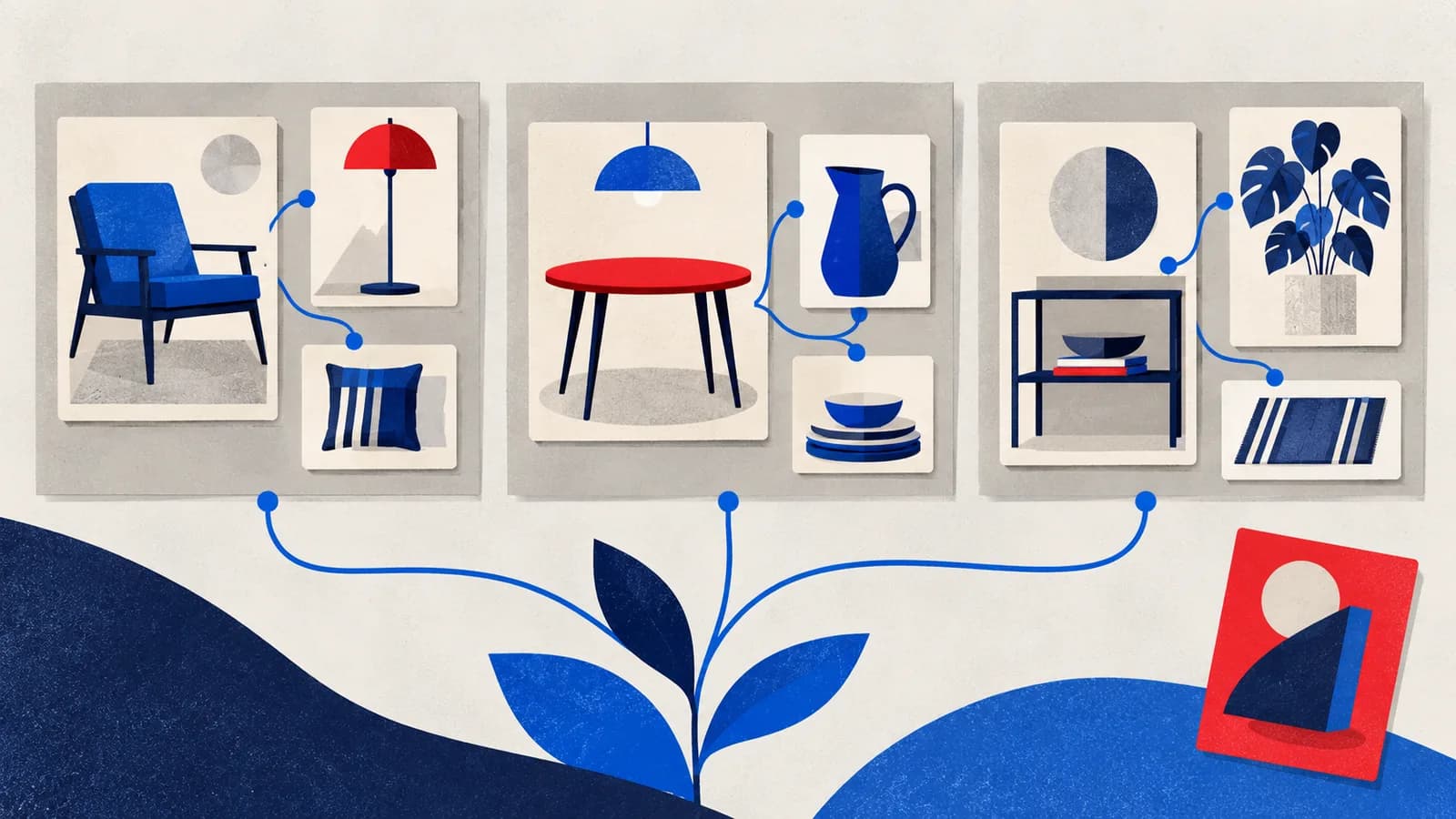
Prepared with AI assistance under the fictional Kai persona and delegated editorial review. The generated geometric cover is a planning metaphor. Recheck the guidance when account controls, products or destinations change.
 MultiCastMARKETING, TOGETHER.
Good ideas deserve a consistent campaign.
Bring your next marketing idea to MultiCast. Keep your brand at the center, from planning to publishing.