Operator playbook
Meta Ad Library: Turn Competitor Ads into a Better Creative Brief
Research competitor ads without guessing their results. Use an observation-and-hypothesis worksheet to turn Meta Ad Library findings into an original brief.
 Kai Renner · · 6 min read
For: US and UK small-business owners preparing their next paid creative brief.
The short answer
Choose a narrow question, record visible evidence and unknowns separately, then propose one original creative test.
A competitor's ad can suggest a question worth testing. It cannot tell you whether that business made money. Use Meta Ad Library to prepare a better brief: record what you can see, separate what you infer, and decide what your own brand could demonstrate differently.
Outcome and prerequisites
Finish with one research sheet and one original creative hypothesis. Bring your offer, intended market, customer question and a short list of relevant advertisers. A document or spreadsheet is enough.
This workflow concerns ordinary commercial advertising for US or UK small businesses. Political-ad reporting and regional transparency requirements have different scopes. Do not transfer their fields or retention rules to every commercial ad.
A usable answer first
Use this sequence: question → advertiser → dated observation → unknown → original test. Stop collecting when you have enough evidence to write the test, rather than trying to count an advertiser's entire history.
Meta's library announcement describes Page search and active-ad visibility. Open the Ad Library, select the relevant country and available commercial-ad category, then search for the advertiser. Check the Page identity against the business's own website before treating results as a competitor's work. Labels and available filters can change.
Worked brief
Imagine a fictional pottery shop preparing a mug campaign. Its question is whether customers need a clearer sense of size before visiting the product page. The owner examines comparable makers serving the same market, not every attractive homeware ad.
An imagined reference opens with a mug held in a hand. The observation is the opening scene. The hypothesis is that showing scale might answer a buying question. Neither the creative's age nor its continued visibility proves that this approach sells more mugs.
The shop's original brief becomes: film our actual mug beside a familiar object, state its verified dimensions, and link to the matching product. Use our voice and our footage. The competitor's image is a reference, not an asset to republish.
Steps and checkpoints
- Bound the search. Record country, category, advertiser, filters and observation date. Keep the same settings when comparing brands; otherwise a difference may come from your search.
- Identify the source. Save the advertiser/Page URL and ad link or displayed library identifier. Record unavailable fields as unknown. A similar brand name is not sufficient identification.
- Describe the visible idea. Note the opening image, customer promise, evidence, format and next step. Meta's transparency explanation describes creative and copy visibility; our worksheet adds an interpretation boundary.
- Keep variants connected. Group similar executions by the idea they express, while retaining their individual links. Multiple cards are not evidence of multiple successful campaigns.
- Write the uncertainty. You have not established profit, conversion rate, budget allocation or why a creative remains visible. If a result is missing, recheck identity and filters; record no result found, not no advertising exists.
- Choose one adaptation. Carry one customer question into your creative-testing brief. Specify your own evidence, what changes, the business outcome to measure and a review point before spending.
Reusable worksheet
Copy the fields into a new sheet. The filled example describes the fictional mug example; replace it with your actual observations.
| Field | Filled example | Your entry |
|---|---|---|
| Search boundary | US; named pottery Page; date recorded | ___ |
| Source record | Original Page and ad links | ___ |
| Visible observation | Opening shot holds a mug in a hand | ___ |
| Interpretation | Scale may be a buying uncertainty | ___ |
| Unknown | Sales impact and advertiser's reasoning | ___ |
| Original response | Our mug, dimensions and own footage | ___ |
| Test decision | One creative change; own outcome and review date | ___ |
Keep observations and hypotheses in different columns even when the explanation feels obvious. That separation lets a colleague disagree with the interpretation without losing the useful source.
Failure modes
A long-running ad becomes a winner label. Treat duration as a research clue. Without the advertiser's results and context, the conclusion remains unproven.
Scrolling becomes the deliverable. More cards do not fix an unclear customer question. Save a bounded selection, note coverage limits, and return to the brief.
An absent ad becomes a market conclusion. Availability, filters and changed campaigns can affect what you find. Avoid claiming a complete archive or guaranteed historical access.
From one-off to recurring
Keep a small watchlist of brands with a written reason for each: similar customer problem, offer or market. On the next review, preserve the earlier observation and add a dated change note. Do not overwrite history with today's interpretation.
Research is useful when it changes a decision about your own creative. If a review produces only more saved links, narrow the question. A shared sheet works for occasional research; any later tool should preserve source links, dates and uncertainty just as clearly.
Find more practical routines in our growth guides.
Evidence and updates
Sources reviewed October 21, 2026. The linked Meta announcements explain transparency features historically; this article does not certify every current filter, market or retention period. The research method, pottery example and worksheet are original editorial proposals, with no campaign outcome claimed.
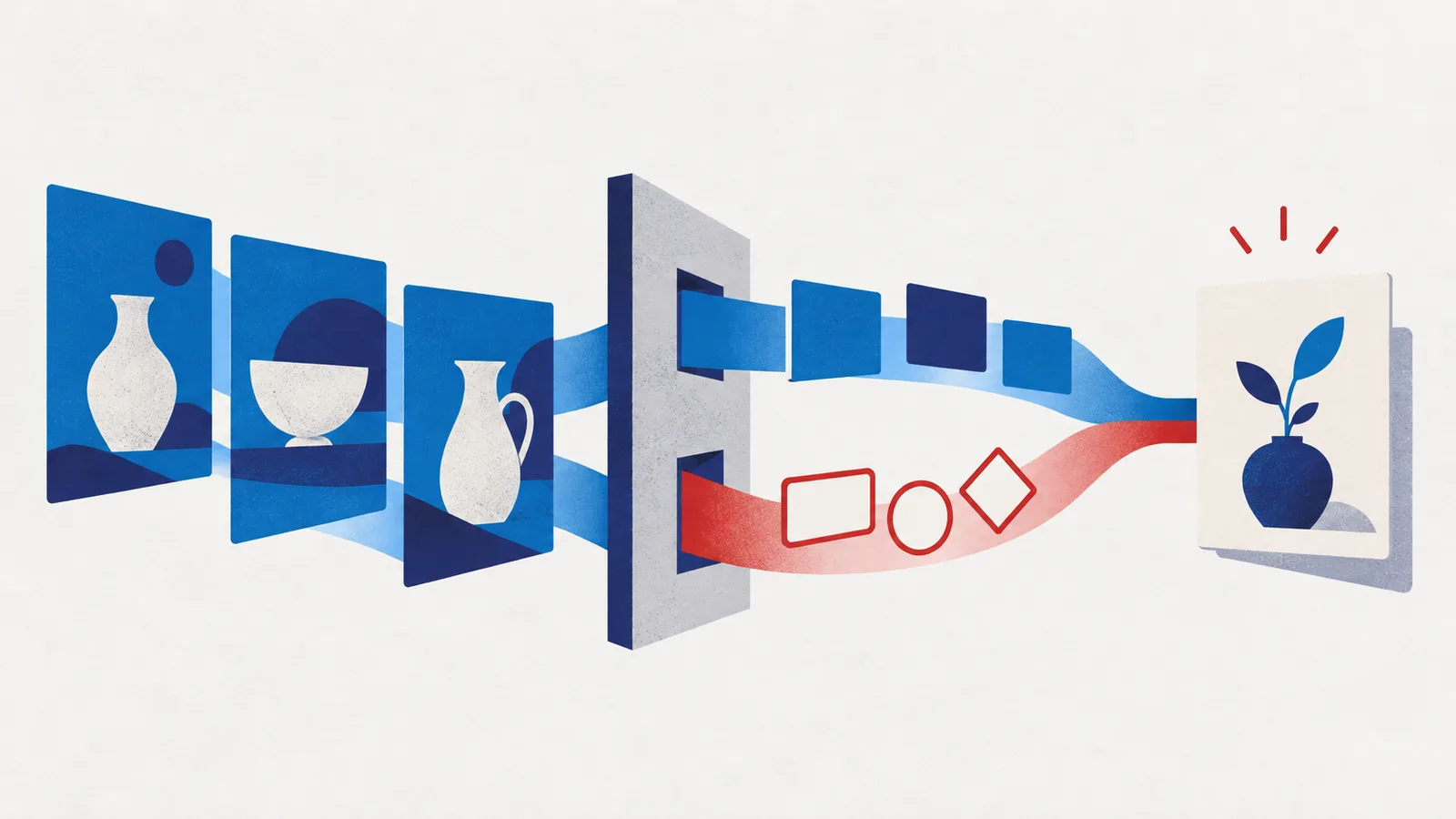
Prepared with AI assistance under MultiCast's fictional Kai persona. The generated cover illustrates a method, not platform data. Recheck account controls and source availability before repeating the research.
 MultiCastMARKETING, TOGETHER.
Good ideas deserve a consistent campaign.
Bring your next marketing idea to MultiCast. Keep your brand at the center, from planning to publishing.